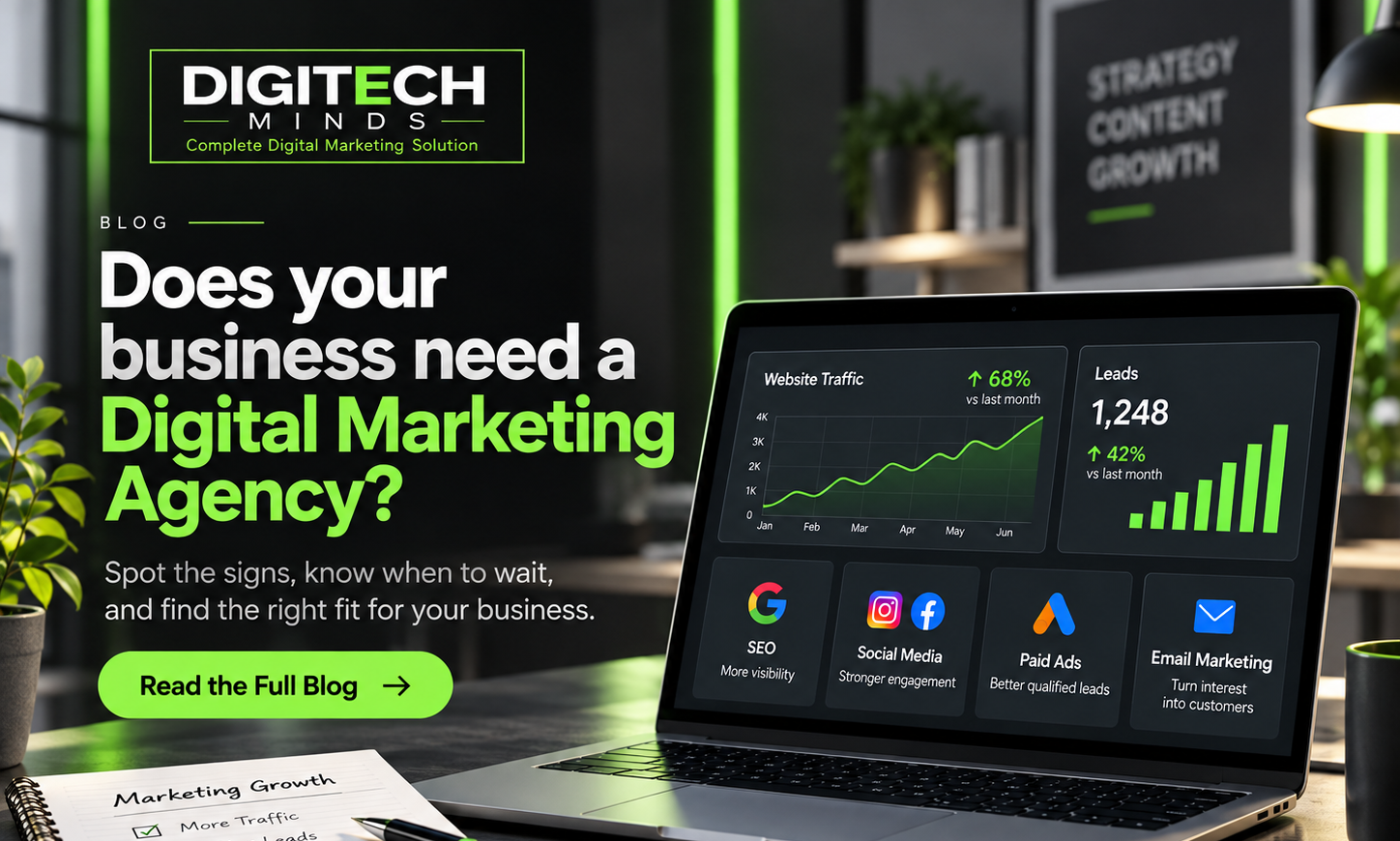
A digital marketing agency can be the right choice when your business needs consistent marketing efforts but your team lacks the time, resources, or expertise to manage them effectively.
The usual signs are steady traffic with few enquiries. You may not know which channels bring leads. Marketing stops when the team gets busy. If two or three of these sound familiar, outside help will probably pay for itself.
If none do, you can likely wait. This guide covers seven signs it’s time to act. It also lists three cases where you should wait. It helps you identify the right marketing setup for your business, whether that means outsourcing to specialists, working with an independent professional, or managing campaigns with your own team.
What are the key indicators that your business should partner with a digital marketing agency?
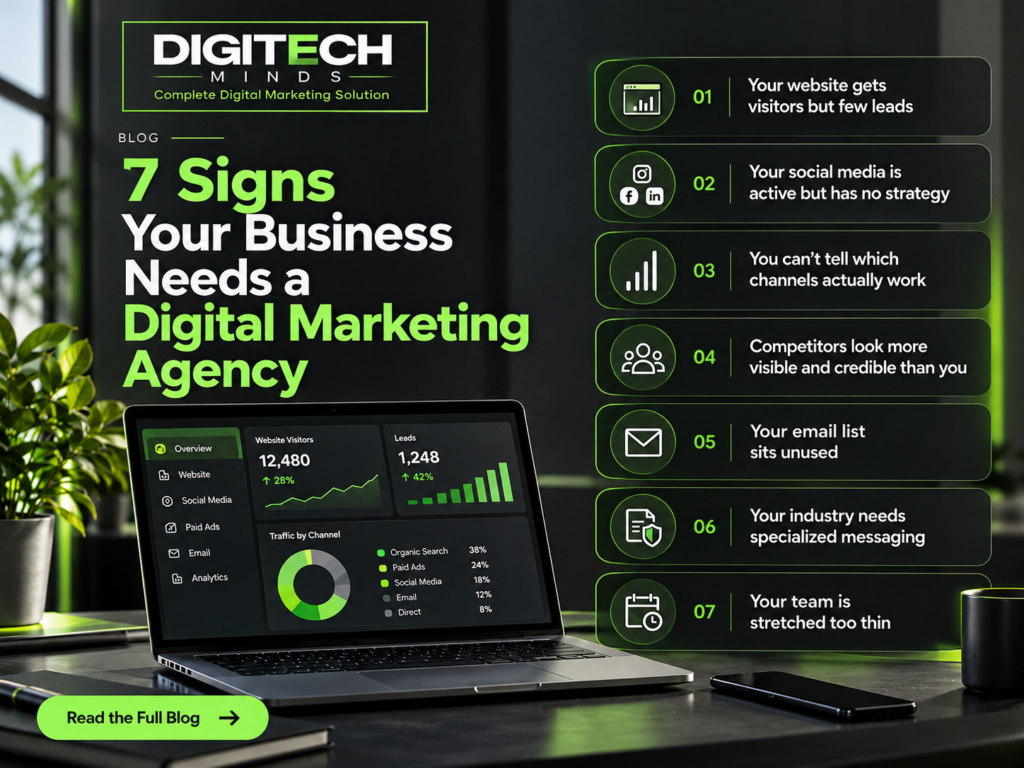
You don’t need all seven signs. Two or three is enough to justify a conversation.
1. Your website gets visitors but few leads
If people visit but do not call, book, or fill in a form, the problem is usually the message.
It can also be the offer, the page structure, or the follow-up, not the traffic. An agency can map the path from first click to enquiry and find where people drop off. The fix is often clearer landing pages, one obvious call to action, and conversion tracking.
You can measure important actions, such as lead form submissions, using Google Analytics key events
2. Your social media lacks a clear strategy despite regular posting
Posting often is not the same as having a plan. A feed made of festival greetings, product photos, and generic tips builds visibility but rarely trust or enquiries. An agency can tie each post to a goal such as awareness, credibility, or leads, so content does a specific job.
3. You can’t tell which channels actually work
Customers rarely follow a straight line. Someone might see you on Instagram, search your name on Google, read reviews, and then reply to an email. Without proper tracking , you end up funding the weak channels and starving the strong ones. Agencies typically set up lead-source tracking, call tracking, and monthly reporting so budget follows evidence.
Accurate conversion tracking helps you understand which marketing activities generate enquiries. Google’s guide to measuring key events explains how to measure these actions.
4. Competitors look more visible and credible than you
When rivals show up first in search, post better content, and display stronger proof, buyers often trust them before they ever speak to you. This matters most in local markets where people compare several providers quickly. Local pages, business listings, and reviews all need to reflect the areas you serve.
5. Your email list sits unused
Collected contacts that never get a follow-up go cold. Welcome sequences, newsletters, and reactivation emails keep your business in front of interested people. A potential customer might not be ready to make a decision right away. They may be ready next month.
6. Your industry needs specialized messaging
Trust-led sectors such as healthcare, dental, legal, education, real estate, and finance can’t rely on generic copy. Buyers in these fields compare options, want reassurance, and need clear next steps. An agency that knows your sector writes service pages, ads, and lead forms.
They focus on the questions your customers actually ask.
7. Your Team Can’t Do It All.
Marketing involves planning, writing, designing, posting, testing, and reporting. When the same people also handle sales or service delivery, marketing gets inconsistent. Even good ideas can fail because of inconsistency.
Agencies that resell services to their own clients can use white-label partners. This adds delivery capacity without hiring.
When can your business manage marketing without an agency?
Hiring an agency isn’t always the best choice for every business. Wait if:
- You have no clear offer yet. Marketing amplifies what exists. If you can’t state who you serve and why they should choose you, fix that first.
- Your budget only covers one task. A single freelancer for one job, like Google Ads setup or website copy, may cost less than a full-service retainer.
- Your leads are fine and you simply want more tactics. If current channels perform and you can measure them, more complexity may not help.
Agency, freelancer, or in-house: which fits?
Agency: An agency manages many marketing channels under one strategy. It is ideal for businesses that need an integrated approach. However, agencies charge more than individual freelancers, and results depend on the team managing your account.
Freelancer: A freelancer focuses on a particular task or marketing channel, making them ideal for businesses with specific requirements. However, you’ll need to manage coordination between multiple freelancers, and their workload capacity depends on their skills and availability.
In-house hire: An in-house employee manages ongoing marketing activities for companies with consistent, long-term needs. However, you must cover their salary, tools, and management costs, and one employee rarely possesses every marketing skill.
What questions should you ask before choosing a digital marketing agency?
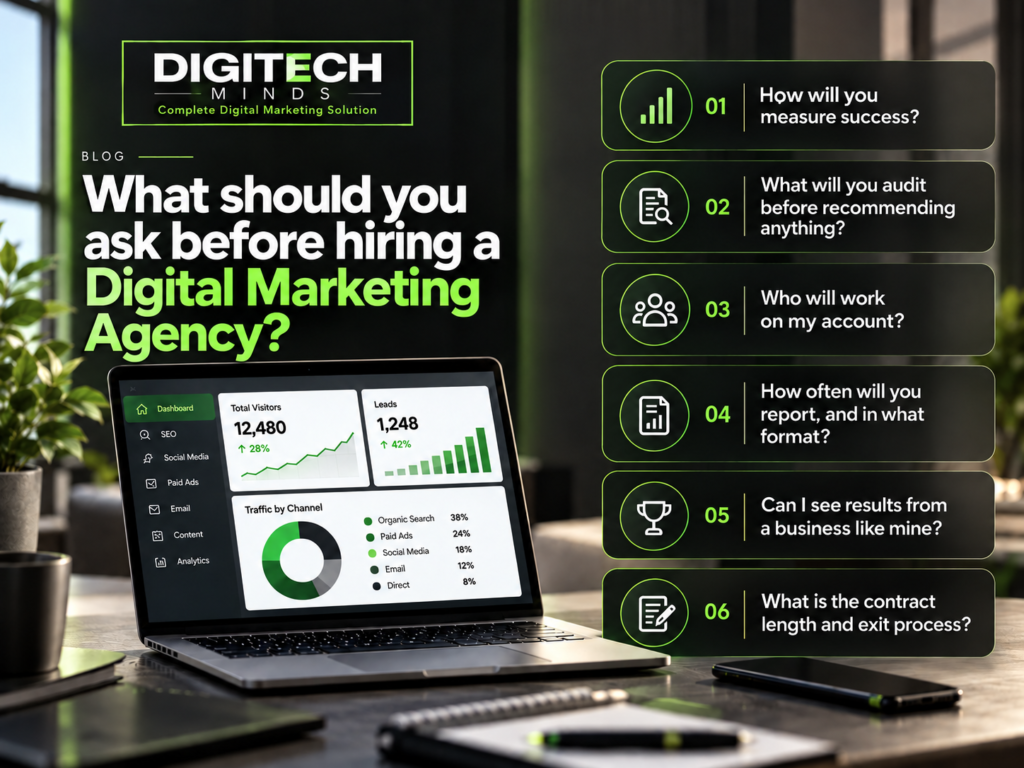
These questions separate a strategic partner from a task vendor:
- How will you measure success? Look for named metrics such as leads, cost per lead, or bookings, not just impressions.
- What will you audit before recommending anything? A good agency reviews your site, tracking, and current channels first.
- Who will work on my account? Ask to meet the actual team, not only the sales lead.
- How often will you report, and in what format? Monthly reporting with clear next steps is a reasonable baseline.
- Can I see results from a business like mine? Sector experience matters, especially in trust-led industries.
- What is the contract length and exit process? Avoid long lock-ins before you’ve seen early results.
Frequently asked questions
How do I know if my marketing isn’t working?
The clearest signal is that you can’t connect spend or effort to enquiries. If you can’t say which channel produced your last ten leads, you can’t tell what’s working.
Is a digital marketing agency worth it for a small business?
It can be, if the agency starts with a focused plan for one or two channels rather than a broad package. Small businesses usually get the best return from clear strategy and tracking before increasing ad spend.
What does a digital marketing agency do?
Most cover SEO and local search, paid ads, social media, email marketing, and website improvements. They also cover landing pages, analytics, and reporting. The best ones connect these into one plan.
How long before an agency shows results?
Paid campaigns can produce data within weeks, while SEO and content typically take several months to build momentum. Ask any agency for realistic timelines by channel.
Conclusion
Hire a digital marketing agency when your marketing has outgrown guesswork but not yet earned a dedicated team. Look for the signs above, rule out the cases where it’s too early, and choose a partner who starts with an audit and clear metrics. Your next step is a focused marketing review.
List your current channels. Check which ones you can track. Identify the biggest gap. If you’d like help with that, get in touch to talk through your goals and the most practical starting point.