Introduction
WhatsApp is no longer just for personal chats. Businesses now use it to talk to customers, share products, answer questions, follow up with leads, and generate sales. This is where WhatsApp Business Marketing comes in. It helps businesses connect with customers directly on a platform they already use and trust.
For small and local businesses, WhatsApp Business Marketing can be especially useful. A customer may find a business on Google, Instagram, Facebook, or a website. They may then use WhatsApp to ask about prices, availability, location, delivery, or services.
This makes it easier for businesses to start conversations and turn interested customers into leads. This guide explains WhatsApp marketing. It shows how to do it well. It covers strategies businesses can use. It also explains how chats can turn into real customers.
What Is WhatsApp Business Marketing?
WhatsApp Business Marketing means using WhatsApp to promote your products or services. It helps you talk to customers, get leads, and build relationships. Businesses can use WhatsApp Business to:
- Answer customer questions
- Share product details
- Send offers and updates
- Follow up with leads
- Share product catalogs
- Get enquiries
- Confirm orders or appointments
- Provide customer support
- Reach out to existing customers
The main benefit is simple: you can talk directly to your customers. For example, a clothing store can share new arrivals. A salon can send appointment reminders. A restaurant can share its menu and take orders. The goal is to help customers connect, ask questions, and take action.
Why WhatsApp Business Marketing Matters for Businesses
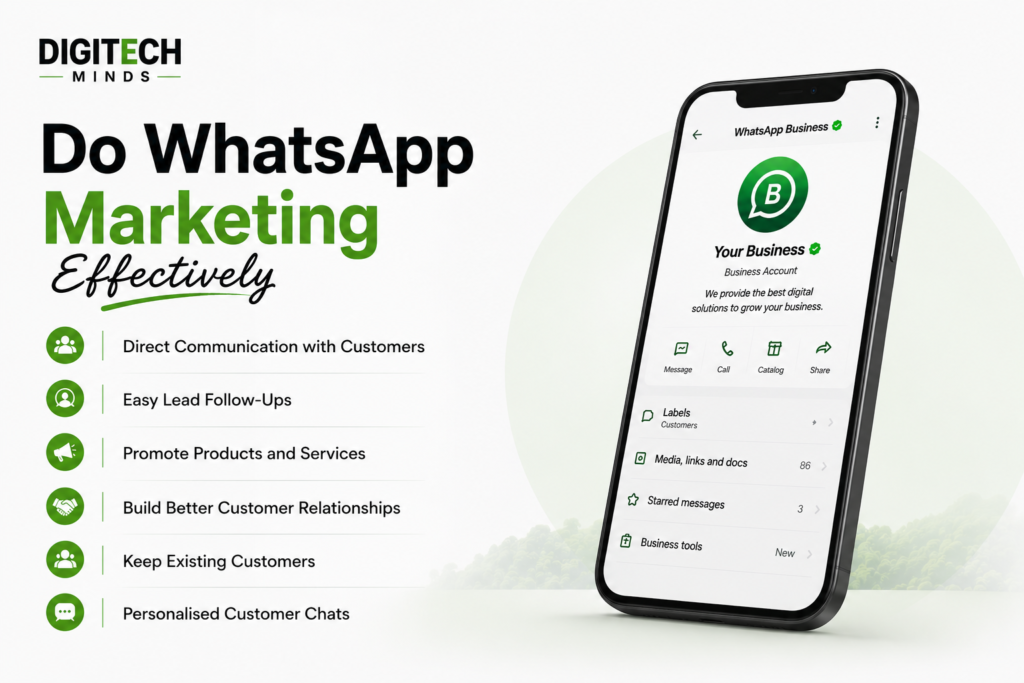
People already use messaging apps to communicate every day. That makes WhatsApp a natural channel for businesses that want to stay connected with their customers. A well-planned WhatsApp strategy can support different stages of the customer journey.
1. Direct Customer Communication
Instead of waiting for customers to call or email, businesses can give them a quick way to start a conversation. This is useful when customers have simple questions such as:
“Is this available?”
“What is the price?”
“Where are you located?”
“Can I book for tomorrow?”
Quick communication can reduce friction between interest and purchase.
2. Better Lead Follow-Ups
Not every person who enquires is ready to buy immediately. WhatsApp can help businesses follow up with people who have shown interest. This works if those customers have opted in to messages.
A helpful follow-up can remind customers about a service, answer a pending question, or provide additional information.
3. Product and Service Promotion
Businesses can use WhatsApp to introduce:
- New products
- Seasonal offers
- Limited-time promotions
- New services
- Events
- Discounts
- Helpful updates
The key is to make the message useful, not to send promotional messages repeatedly.
4. Stronger Customer Relationships
Marketing doesn’t stop after a sale. Businesses can continue communicating with customers through useful updates, support, reminders, and relevant recommendations. This can help turn a one-time buyer into a repeat customer.
5. Customer Retention
WhatsApp can also help businesses stay connected with existing customers through useful updates, reminders, and relevant offers.
6. Personalised Conversations
Different customers can have different needs. A conversation-based channel makes it easier to address those needs individually.
How to Do WhatsApp Marketing Effectively
To do WhatsApp marketing effectively, businesses should build a relevant audience, create useful messages, use the right WhatsApp Business features, follow up consistently, and measure actual business results.
Simply sending promotional messages to a large contact list is not a strategy. A better approach is to follow these steps.
1. Create a Professional WhatsApp Business Profile
Start with the basics. Your business profile should clearly communicate:
- Business name
- Business category
- Description
- Business hours
- Location
- Website
- Contact information
A customer should be able to understand what your business does without having to ask basic questions.
2. Define Your Marketing Goal
Every campaign should have a purpose. Your goal might be to:
- Generate leads
- Increase product enquiries
- Get more bookings
- Promote a new product
- Bring back existing customers
- Increase repeat purchases
- Provide customer support
A clear goal makes it easier to decide what message to send and what result to measure.
3. Build a Relevant Customer List
Quality matters more than quantity. Don’t collect contacts simply to increase your list size. Communicate with people who have a legitimate reason to hear from your business and respect their communication preferences. You can build your audience through:
- Website enquiries
- Existing customers
- Social media
- In-store interactions
- Lead-generation campaigns
- Click-to-WhatsApp ads
- Website contact buttons
4. Segment Your Audience
Different customers may be interested in different products or services. For example, a clothing store could separate audiences based on:
- Men’s clothing
- Women’s clothing
- Kids’ clothing
- Festive collections
- New arrivals
This allows businesses to send more relevant communication instead of sending the same message to everyone.
5. Write Short and Useful Messages
Good WhatsApp marketing messages don’t need to be complicated. A useful message usually communicates:
What is being offered → Why it matters → What the customer can do next.
For example:
New festive collection is here 🎉
Explore our latest styles and message us on WhatsApp for prices and availability.
Clear beats clever.
WhatsApp Marketing Campaigns: What Can You Promote?
A WhatsApp marketing campaign is a planned set of messages or conversations designed around a specific business goal. The goal could be generating enquiries, promoting a product, increasing bookings, or bringing previous customers back. Here are a few practical WhatsApp campaign ideas.
New Product Campaign
Launching something new? Share the product with a short description, relevant image, price or key benefit, and a simple way to enquire.
Seasonal Offer Campaign
Businesses can create campaigns around occasions, seasons, or special promotions.
For example:
Diwali Special Offer ✨
Get [offer details] this week. Message us to know more.
Customer Re-Engagement Campaign
Existing customers can drive repeat business. A business can send relevant updates to customers who opted in. It does not always need to find new audiences.
Appointment or Booking Campaign
Service businesses, like salons, clinics, consultants, and training institutes, can use WhatsApp. They can encourage bookings and answer customer questions.
What Are WhatsApp Marketing Messages?
WhatsApp marketing messages are business messages used to communicate relevant information, promotions, product updates, reminders, or follow-ups to customers.
The quality of your WhatsApp marketing messages can directly affect how customers respond. Different businesses need different message formats, but some useful categories include:
Promotional Messages
Use these for relevant offers, discounts, launches, and promotions.
Educational Messages
Share useful tips, product information, guides, or answers to common customer questions.
Reminder Messages
Useful for appointments, bookings, events, renewals, and other time-sensitive activities.
Product Updates
Inform interested customers about new arrivals, restocks, features, or availability.
Follow-Up Messages
If someone has already enquired, a helpful follow-up can keep the conversation moving. Avoid sending unnecessary messages to stay active. Frequent irrelevant messages can annoy customers and reduce engagement.
Examples of WhatsApp Marketing Messages
Product promotion:
Our new summer collection is now available. Message us for sizes and pricing.
Appointment reminder:
Your appointment is scheduled for tomorrow at 5 PM. Reply here if you need any help.
New arrival:
New stock has arrived! Check our latest collection and message us for details.
Follow-up:
Hi! You recently enquired about our service. Would you like us to share the available options?
Notice that these messages don’t need exaggerated claims or excessive emojis.
Useful information creates a better customer conversation than constant promotion.
WhatsApp Business Features Businesses Can Use
A good WhatsApp strategy doesn’t require complicated marketing technology from day one. Businesses can start with basic features and expand as their needs grow. You can also explore official WhatsApp Business features.
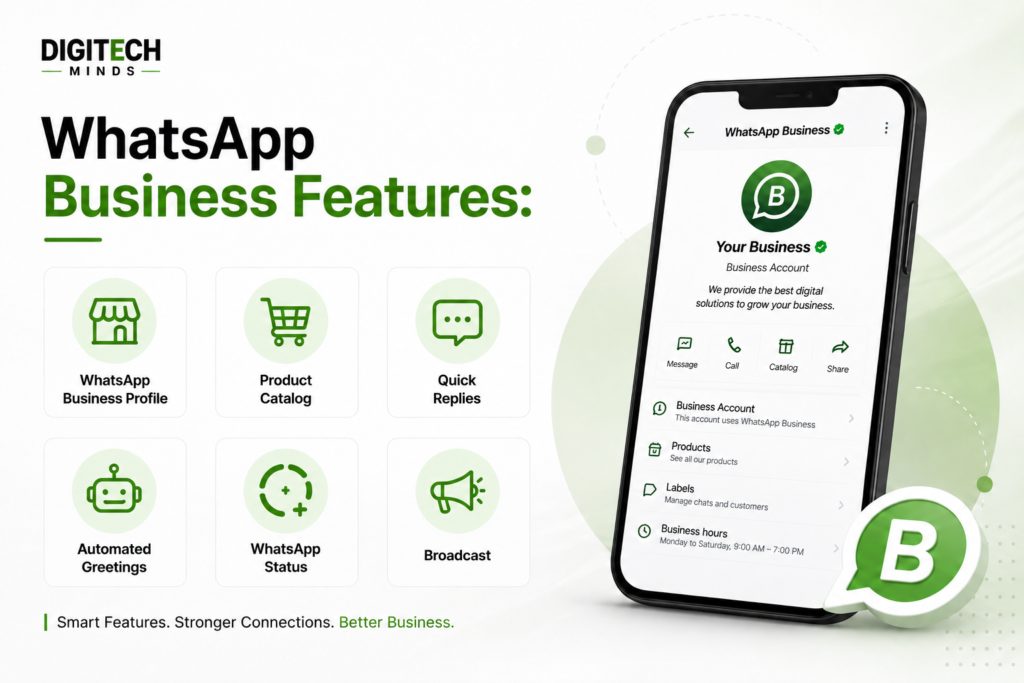
WhatsApp Business Profile
Helps customers understand who you are and what your business offers.
Product Catalog
A catalog can make it easier to showcase products, prices, descriptions, and other useful information.
Quick Replies
Useful for answering common questions without repeatedly typing the same response.
Automated Greetings
A greeting can acknowledge a new customer and set expectations for the conversation.
WhatsApp Status
Businesses can use Status to share updates and new products. They can also share behind-the-scenes content, offers, and helpful information with their audience.
Broadcasts
Broadcast-style communication can help businesses reach opted-in contacts without turning the conversation into a noisy group chat. The feature you choose should depend on your business goal, audience, and communication needs.
WhatsApp Business Marketing for Small and Local Businesses
WhatsApp can be particularly useful for businesses that depend on local customers and direct enquiries. For example:
| Business | Possible WhatsApp Use |
|---|---|
| Salon | Appointment bookings and offers |
| Restaurant | Menu sharing and enquiries |
| Clothing Store | New arrivals and product enquiries |
| Clinic | Appointment communication |
| Coaching Institute | Course enquiries and follow-ups |
| Real Estate | Property enquiries and updates |
| Home Services | Quotes and booking requests |
| Retail Store | Product availability and promotions |
A local business doesn’t necessarily need a large marketing budget to start. A simple journey can look like:
Google Search → Website/Google Business Profile → WhatsApp → Enquiry → Follow-Up → Customer
This is where WhatsApp can complement other digital marketing channels instead of replacing them. WhatsApp can complement your broader digital marketing strategy in Kotdwar, alongside SEO, social media, and paid advertising.
WhatsApp Marketing vs Traditional Advertising
Traditional advertising is generally designed to reach a large audience and generate awareness. WhatsApp is more conversation-focused.
| Traditional Advertising | WhatsApp Marketing |
|---|---|
| Broad audience reach | Direct conversations |
| Often awareness-focused | Conversation and relationship-focused |
| Customer may take several steps | Customer can enquire directly |
| Usually one-way communication | Two-way communication |
| Useful for discovery | Useful for follow-up and conversion |
This doesn’t mean one is automatically better than the other. A strong digital marketing strategy can use advertising to generate attention and WhatsApp to continue the conversation.
Common WhatsApp Marketing Mistakes to Avoid
WhatsApp can be powerful, but poor execution can quickly turn customers away.
Sending Too Many Messages
More messages don’t automatically mean more sales. Focus on relevance and timing.
Sending Messages Without Permission
Businesses should communicate responsibly and respect customer preferences.
Making Every Message Promotional
Useful content, updates, support, and relevant information can make communication feel more valuable.
Writing Long, Confusing Messages
Keep the important information easy to understand.
No Clear CTA
To encourage customers to enquire, book, order, or view something, make the next step obvious.
Ignoring Customer Replies
WhatsApp marketing is conversational. If customers respond, timely and helpful replies matter.
How DigiTech Minds Approaches WhatsApp Business Marketing

At Digitech Minds, we see WhatsApp as part of the full customer journey. We do not treat it as a standalone promo channel. Businesses can combine SEO services in Kotdwar with WhatsApp to turn search traffic into direct customer enquiries. For a business, the strategy may connect:
SEO → Google Search → Website → WhatsApp → Lead → Follow-Up → Customer
For another business, it could be:
Instagram/Facebook Ads → WhatsApp → Enquiry → Sales Conversation
The right approach depends on the business, target audience, offer, and customer journey. The goal isn’t simply to generate more WhatsApp conversations. The goal is to generate relevant conversations that have a real chance of becoming enquiries, customers, and repeat business. Contact Digitech Minds NOW !!
Frequently Asked Questions
What is WhatsApp Business Marketing?
WhatsApp Business Marketing uses WhatsApp to promote products or services. It helps you communicate with customers, generate leads, and support sales.
How do I do WhatsApp marketing?
Start by creating a professional business profile. Understand your audience. Create useful messages. Build an opt-in customer list. Track enquiries and conversions.
Is WhatsApp marketing good for small businesses?
Yes. Small businesses can use WhatsApp for customer enquiries, product promotion, bookings, follow-ups, support, and repeat-customer communication.
What are WhatsApp marketing messages?
WhatsApp marketing messages are business messages sent to relevant customers. They share promotions, product updates, reminders, educational content, or follow-ups.
What is a WhatsApp marketing campaign?
A WhatsApp marketing campaign is a planned messaging effort with a clear goal. It may generate leads, promote a product, increase bookings, or re-engage customers.
Can WhatsApp marketing generate leads?
Yes. Businesses can use WhatsApp for direct enquiries. They can link it to other marketing like SEO, websites, social media, and ads.
Final Thoughts
WhatsApp Business Marketing is more than sending promotional messages. Creating a simple, useful communication channel between a business and its customers is the goal.
From product catalogs and WhatsApp marketing messages to campaigns, follow-ups, and support, businesses can use WhatsApp. They can use it at different stages of the customer journey.
The best results usually come from a simple principle:
Don’t just send messages. Start conversations that matter.
And that’s where WhatsApp can become much more than a messaging platform.